
Sem Mukhem: An Important Centre of Faith and the Site of Lord Krishna’s Austerities
Every year, a large number of devotees visit this place to express their faith and devotion. Beyond its religious importance, Sem Mukhem also holds considerable cultural and historical value as part of the region’s traditional heritage.
INSIGHTS
Sanjay Awasthi
11/29/20253 min read
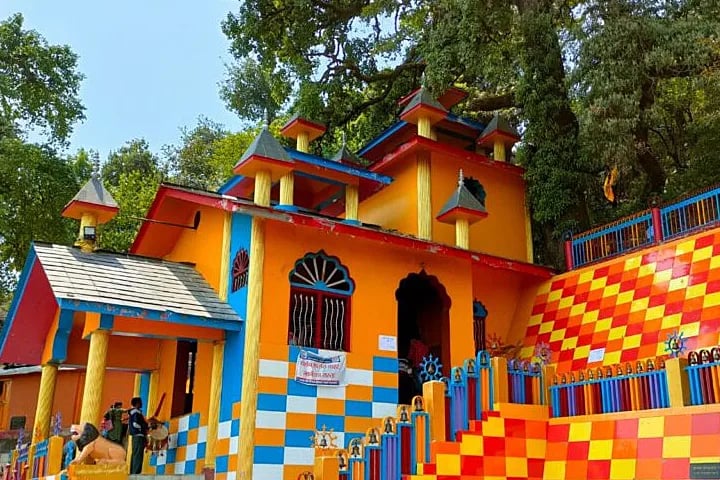
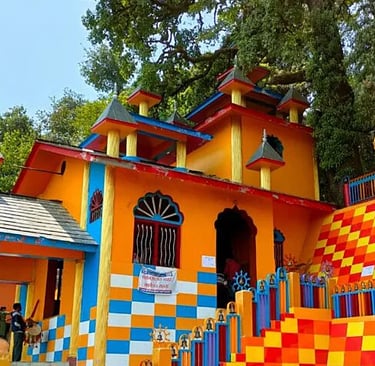
The Pratapnagar region of Tehri district in Uttarakhand represents a remarkable convergence of natural beauty, folklore, and profound spiritual traditions. Nestled within dense forests, Sem Mukhem is regarded as a unique sacred site associated with the childhood exploits, austerities, and popular beliefs surrounding Lord Krishna. Every year, a large number of devotees visit this place to express their faith and devotion. Beyond its religious importance, Sem Mukhem also holds considerable cultural and historical value as part of the region’s traditional heritage.
Religious Beliefs and Public Faith at Sem Mukhem
Each year, thousands of pilgrims visit Sem Mukhem. It is widely believed that sincere worship at this site helps devotees overcome their difficulties and sufferings. On special occasions, villagers arrive with their Dev Doli (processional symbols of village deities) to seek blessings from Lord Krishna. The site is closely associated with traditional narratives of Krishna’s divine childhood activities, which further enhance its perceived sanctity among locals.
The Legend of King Gangu Ramola and Lord Krishna
A well-known folk legend associated with Sem Mukhem narrates the encounter between Lord Krishna and King Gangu Ramola. According to tradition, Krishna arrived in the guise of a wandering ascetic and requested merely two measures of land from the king. However, due to arrogance, the king refused the request. As a consequence, Krishna is said to have turned the king’s cattle—buffaloes, goats, and other animals—into stone. Even today, certain rock formations in the area are identified by local residents as remnants of this event, reinforcing the narrative's presence in collective memory.
The Curse and Its Lasting Impact
The story further states that when King Ramola refused to provide alms to the disguised ascetic, he was cursed such that every descendant in his lineage would be compelled to beg at least once during his lifetime. This belief continues symbolically to the present day. Regardless of wealth or social status, members of the Ramola community reportedly engage once a year in a ritual act of symbolic begging, reinforcing adherence to ancestral traditions.
The Blessing of a Son
Despite the king’s initial defiance, Lord Krishna is believed—according to folk narratives—to have appeared in a dream to Queen Ramola and instructed her to persuade the king to abandon his arrogance. Upon repentance, Krishna granted the couple the opportunity to seek a boon. They requested the blessing of offspring, and the queen soon gave birth to two sons, Bidwa and Sindhwa, who later gained recognition and status within the region.
Association with the Legend of Kaliya Naga
Sem Mukhem is also linked with the episode of Kaliya Naga from Krishna’s childhood legends. It is believed that after being defeated by Krishna, the serpent sought refuge in this region. According to tradition, Kaliya requested a final vision of Krishna at the end of his life. It is believed that Krishna granted this wish at Ramolagarhi village in Uttarakhand, where he is said to have manifested in stone form. A temple now stands at that site, commemorating this event.
Sem Mukhem as a Site of Austerity
Local religious traditions hold that Sem Mukhem served as a site of meditation and penance for Lord Krishna. According to village priests, Krishna performed ascetic practices here among forest dwellers, contributing to the area's reputation as a center of spiritual energy. Visitors often report experiencing inner peace and emotional relief upon visiting the location.
Rituals Related to Kaal Sarp Dosha
Astrological beliefs also influence ritual practices at the temple. Devotees who are believed to suffer from Kaal Sarp Dosha (a planetary affliction in Hindu astrology) offer pairs of silver serpent figurines at the shrine. This ritual is believed to neutralize negative astrological influences and protect against premature death.
The Phenomenon of the Moving Stone
The temple is located at an elevation of approximately 7,000 feet above sea level. One intriguing feature at Sem Mukhem is a stone that reportedly does not move when pushed with force, but shifts easily when touched with a single finger. This phenomenon is widely regarded as miraculous, contributing to the site’s spiritual significance among believers.
Conclusion
Sem Mukhem is not merely a religious destination but a living repository of folklore, belief systems, and cultural traditions connected with Lord Krishna. Situated amidst the Himalayan landscape, the site represents an integration of nature, history, and spirituality, offering visitors a deeply symbolic and reflective experience.
Disclaimer: This article was originally written in Hindi and later translated into English. While care has been taken to maintain accuracy, some variation in phrasing may exist.
Author Bio: Sanjay Awasthi is affiliated with the Department of Hindi, Kumaun University, as a teacher and Ph.D. scholar in Folk Literature. His work explores indigenous traditions, folk narratives, and cultural identity.